
社会杂志 ›› 2026, Vol. 46 ›› Issue (3): 180-208.
李瑞彤( )
)
出版日期:2026-05-20
发布日期:2026-07-24
作者简介:李瑞彤 复旦大学社会发展与公共政策学院社会学系, E-mail:rtli22@m.fudan.edu.cn
LI Ruitong, Department of Sociology, School of Social Development and Public Policy, Fudan University, E-mail: rtli22@m.fudan.edu.cn
Ruitong LI()
Online:2026-05-20
Published:2026-07-24
摘要:
对灾难记忆的研究主要关注叙事的建构,使得灾难本身的经验现实逐渐被话语过程所遮蔽,造成记忆的风化与销蚀。本研究以保存汶川大地震灾难记忆的私人博物馆作为田野对象,考察其如何通过直接平移灾区实物对灾难进行纪念。研究发现,受灾物一方面将灾难记忆的符号意义重新还原为生活的复杂与真实;另一方面,通过物质固定下来的破坏与创伤又激发出具有道德意涵的审美体验。由此,零散的日常之物转化为凝聚集体意识的共同体图腾。对记忆的物质性的强调揭示出民间纪念以不可替代的物质经验补充了主流叙事框架,维系了关于灾难的集体记忆。
李瑞彤. 灾难如何收藏:记忆的物质性与文化创伤的图腾[J]. 社会杂志, 2026, 46(3): 180-208.
Ruitong LI. Collecting Disasters: The Materiality of Memory and the Totem of Cultural Trauma[J]. Chinese Journal of Sociology, 2026, 46(3): 180-208.
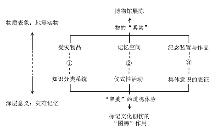
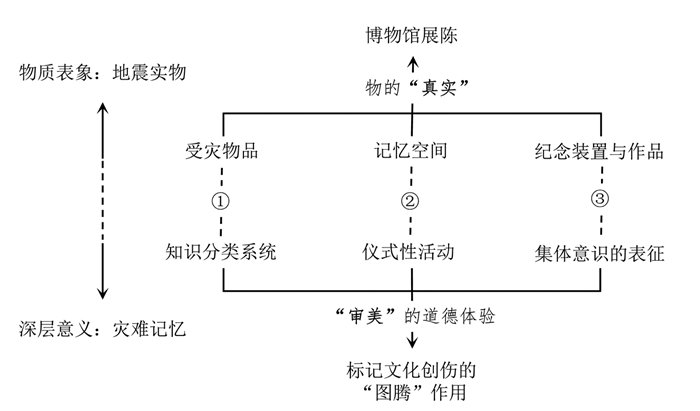
图 1:
研究框架示意图"
|
巴特曼斯基、 多米尼克 . 2015. 重塑社会学的想象力——语言/视觉二元论以及文化社会学的符像转向[J]. 社会 (3): 37- 66.
|
|
|
哈布瓦赫, 莫里斯. 2002. 论集体记忆[M]. 毕然、郭金华, 译. 上海: 上海人民出版社.
|
|
|
哈布瓦赫, 莫里斯. 2024. 记忆的社会框架[M]. 陈秀萍, 译. 台北: 麦田出版社.
|
|
|
李瑞彤 . 2025. 纪念物的营造: 日常之物如何进入地震博物馆——地方性的共在与共鸣[J]. 遗产 (11): 318- 332.
|
|
|
李兴钢、 付邦保、 张音玄、 谭泽阳 . 2010. 虚像、现实与灾难体验——建川文革镜鉴博物馆暨汶川地震纪念馆设计[J]. 建筑学报 (11): 44- 47.
|
|
|
刘亚秋 . 2010. 从集体记忆到个体记忆——对社会记忆研究的一个反思[J]. 社会 (5): 217- 242.
|
|
|
刘亚秋 . 2018. 记忆研究的"社会—文化"范式: 对"哈布瓦赫—阿斯曼"研究传统的解读[J]. 社会 (1): 104- 133.
|
|
|
钱力成、 张翮翾 . 2015. 社会记忆研究: 西方脉络, 中国图景与方法实践[J]. 社会学研究 (6): 215- 237.
|
|
|
山泰幸 . 2020. "遗址社会学"的可能性[J]. 遗产 (1): 114- 124.
|
|
|
涂尔干, 爱弥尔. 2011. 宗教生活的基本形式[M]. 渠东, 汲喆, 译. 北京: 商务印书馆.
|
|
|
王晓葵 . 2008. 国家权力、丧葬习俗与公共记忆空间——以唐山大地震殉难者的埋葬与祭祀为例[J]. 民俗研究 (2): 5- 25.
|
|
|
王晓葵 . 2013. 灾害文化的中日比较——以地震灾害记忆空间构建为例[J]. 云南师范大学学报(哲学社会科学版) (6): 47- 55.
|
|
|
王晓葵 . 2014. 灾害记忆图式与社会变迁——谁的唐山大地震[J]. 新史学 119- 143.
|
|
|
王晓葵 . 2016. "灾后重建"过程的国家权力与地域社会——以灾害记忆为中心[J]. 河北学刊 (5): 161- 166.
|
|
|
王晓葵 . 2022. 事件的真实与记忆的表象[J]. 探索与争鸣 (3): 94- 96.
|
|
|
张力生 . 2022. "博物"与"明志"——一座民间博物馆的道德关怀[J]. 博物院 (2): 97- 105.
|
|
|
周怡 . 2015. 表演和符像——再读杰弗里·亚历山大的强文化范式[J]. 文化研究 (2): 68- 81.
|
|
|
周怡 . 2024. 社会学怎样接纳文化?——文化社会学与文化研究之辨[J]. 社会学评论 (5): 5- 25.
|
|
|
|
|
|
|
|
|
|
|
|
|
|
|
|
|
|
|
|
|
|
|
|
|
|
|
|
|
|
Eyerman, Ron. 2017. "Cultural Trauma: Emotion and Narration." In The Oxford Handbook of Cultural Sociology, edited by Jeffrey C. Alexander, Ronald N. Jacobs, Philip Smith. Oxford: Oxford University Press: 564-582.
|
|
|
|
|
|
|
|
|
|
|
|
|
|
|
|
|
|
|
|
|
|
|
|
|
|
|
|
|
|
|
|
|
|
|
|
|
|
|
|
|
|
|
|
|
Kopytoff, Igor. 1986. "The Cultural Biography of Things: Commoditization as Process." In The Social Life of Things, edited by Arjun Appadurai. Cambridge: Cambridge University Press: 64-92.
|
|
|
|
|
|
|
|
|
|
|
|
|
|
|
|
|
|
|
|
|
Mohr, John, Christopher Bail, Margaret Frye, Jennifer Lena, Omar Lizardo, Terence McDonnell, Ann Mische, Iddo Tavory, and Frederick Wherry. 2020. Measuring Culture. New York: Columbia University Press.
|
|
|
|
|
|
|
|
|
|
|
|
|
|
|
|
|
|
Schwartz, Barry. 2016. "Rethinking the Concept of Collective Memory." In Routledge International Handbook of Memory Studies. London: Routledge.
|
|
|
Schwartz, Barry. 2018. "Culture and Collective Memory: Comparative Perspectives." In Routledge Handbook of Cultural Sociology(2nd ed.). London: Routledge.
|
|
|
Seaton, Philip. 2015. "Japanese War Memories and Commemoration after the Great East Japan Earthquake." In Routledge International Handbook of Memory Studies. London: Routledge.
|
|
|
|
|
|
|
|
|
|
|
|
|
|
|
|
|
|
|
|
|
|
|
|
|
|
|
|
|
|
|
|
|
Wagner-Pacifici, Robin. 2018. "The Sociological Experience of Cultural Objects." In Routledge Handbook of Cultural Sociology(2nd ed.). London: Routledge.
|
|
|
Xu, Bin. 2016. "Disaster, Trauma, and Memory." In Routledge International Handbook of Memory Studies. London: Routledge.
|
|
|
|
|
|
Zhang, Lisheng. 2020. "Jianchuan Museum Complex: Memory, Ethics and Power in Chinese Private Heritage Entrepreneurship." Conference Paper, University College London.
|
|
|
Zhang, Lisheng. 2021a. "'Slave(s)' to the Great Museum: Heritage, Labour and Ethics in the Jianchuan Museum Complex." In Grassroots Values and Local Cultural Heritage in China. Lanham: Lexington Books.
|
|
|
Zhang, Lisheng. 2021b. "Complex Collections, Contentious Memories: Reflections on the Jianchuan Museum Cluster." In Cultural China: The Contemporary China Centre Review. London: University of Westminster Press.
|
| [1] | 余昕. 燕窝贸易的三重世界:南洋华人的价值理论、物质性与生产[J]. 社会杂志, 2021, 41(3): 103-142. |
| [2] | 高蕊. 记忆中的伤痛:阶级建构逻辑下的集体认同与抗战叙事[J]. 社会杂志, 2015, 35(3): 67-94. |
| [3] | 李英飞. 涂尔干早期社会理论中的“社会”概念[J]. 社会杂志, 2013, 33(6): 1-29. |
| 阅读次数 | ||||||
|
全文 |
|
|||||
|
摘要 |
|
|||||
