
社会杂志 ›› 2026, Vol. 46 ›› Issue (3): 209-239.
• 论文 • 上一篇
仲超( ), 张浩淼
出版日期:2026-05-20
发布日期:2026-07-24
作者简介:仲超 兰州大学哲学社会学院, E-mail:zhongchao0414@163.com
ZHONG Chao, School of Philosophy and Sociology, Lanzhou University, E-mail: zhongchao0414@163.com
张浩淼 四川大学公共管理学院
ZHANG Haomiao, School of Public Administration, Sichuan University
基金资助:
Chao ZHONG(), Haomiao ZHANG
Online:2026-05-20
Published:2026-07-24
Supported by:摘要:
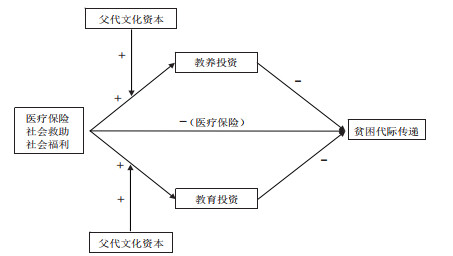
20世纪90年代中国国有企业改革造成大批职工下岗,由此引发了一种以下岗家庭为主体的“新城市贫困”现象,中央政府随即强力推进城市社会保障体系建设。既有研究主要关注社会保障政策对下岗职工世代(父代)的减贫效应,而忽视了其对子代成长与发展尤其是贫困代际传递的影响。鉴于此,本文基于中国健康与营养调查1989—2015年数据研究发现:养老保险政策并未呈现代际减贫效应,但医疗保险以及社会救助、社会福利等现金转移支付政策能够提升代际投入水平,通过在子代教养投资路径中发挥缓冲效应,以及在教育投资路径中发挥发展效应,进而减缓贫困的代际传递。同时,这种干预作用受到父代文化资本的调节,在父代文化资本更丰富的家庭,社会保障政策促进代际投资的政策效应更加显著。未来研究和政策实践需要关注政策干预与家庭关系的互动,重视激活贫困家庭的内生动力,从而更好地发挥外在政策干预的代际减贫效应。
仲超, 张浩淼. 社会保障政策的代际减贫效应——基于中国健康与营养调查的追踪研究[J]. 社会杂志, 2026, 46(3): 209-239.
Chao ZHONG, Haomiao ZHANG. Intergenerational Poverty Reduction Effects of Social Security Policies: A Longitudinal Study Based on the China Health and Nutrition Survey[J]. Chinese Journal of Sociology, 2026, 46(3): 209-239.
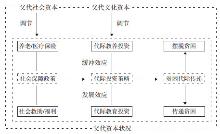
图 1:
社会保障政策对下岗家庭贫困代际传递的减缓机理"
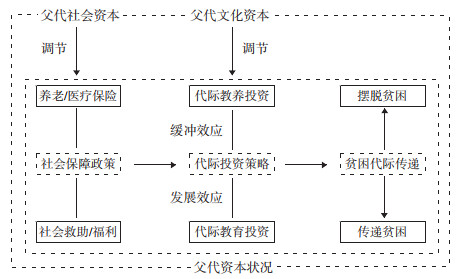

表 1:
贫困下岗家庭的代际传递状况"
| 摆脱贫困 | 传递贫困 |
| 82.07% | 17.93% |
表 2:
变量的定义与赋值"
| 变量 | 定义与赋值 | ||
| 因变量 | 贫困代际传递 | 传递贫困=1,摆脱贫困=0 | |
| 核心自变量 | 社会保障政策 | 养老保险 | 父代达到退休年龄后第一年养老金收入的对数 |
| 医疗保险 | 父代下岗后下一调查期参加了医疗保险=1,否则=0 | ||
| 社会救助 | 在父代下岗后下一调查期,家庭因贫困或残疾获得转移性收入=1,未获得=0 | ||
| 社会福利 | 在父代下岗后下一调查期,家庭获得现金和实物补贴=1,未获得=0 | ||
| 中介变量 | 教养投资 | 在父代下岗后下一调查期,子代照料方式为父母照料=1,非父母照料=0;子代看电视管束和引导为很少(<1次/月)、较少(1-3次/月)=0,有时(1-2次/周)、经常(3-4次/周)、通常(>=5次/周)=1。子代照料方式=1或子代看电视管束和引导=1,则家庭教养投资=1,否则=0 | |
| 教育投资 | 家庭年度教育支出的对数 | ||
| 调节变量 | 父代文化资本 | 下岗职工本人(夫妻双方一人下岗)或户主(夫妻双方均下岗)受教育年限 | |
| 父代社会资本 | 父代下岗后到子代成年前各调查期家庭平均人情礼金支出的对数 | ||
| 控制变量 | 父代下岗前职业地位 | 下岗前单位类型 | 国有企业=1,集体企业=0 |
| 下岗前岗位类型 | 管理者、办公室一般工作人员、专业/技术工作者=1,技术工人=2,非技术工人、其他=3 | ||
| 子代人口学特征 | 性别 | 男=1,女=0 | |
| 兄弟姐妹数量 | 子代拥有的兄弟姐妹数量 | ||
| 地区 | 省份 | 辽宁=21,黑龙江=23,江苏=32,山东=37,河南=41,湖北=42,湖南=43,广西=45,贵州=52 | |
表 3:
主要变量描述性统计分析结果"
| 变量 | 全样本 | 代际脱贫家庭 | 代际贫困家庭 | 组间差异 | ||||
| 均值 | 标准差 | 均值 | 标准差 | 均值 | 标准差 | 均值 | ||
| 养老保险 | 1.568 | 2.914 | 1.753 | 3.028 | 0.720 | 2.131 | 1.034*** | |
| 医疗保险 | 0.812 | 0.391 | 0.868 | 0.338 | 0.551 | 0.499 | 0.317*** | |
| 社会救助 | 0.206 | 0.405 | 0.223 | 0.416 | 0.128 | 0.334 | 0.095*** | |
| 社会福利 | 0.447 | 0.497 | 0.512 | 0.500 | 0.153 | 0.361 | 0.359*** | |
| 教养投资 | 0.535 | 0.499 | 0.615 | 0.487 | 0.168 | 0.375 | 0.447*** | |
| 教育投资 | 2.964 | 3.882 | 3.174 | 3.909 | 1.995 | 3.596 | 1.178*** | |
| 父代文化资本 | 8.643 | 2.334 | 8.795 | 2.453 | 7.949 | 1.501 | 0.846*** | |
| 父代社会资本 | 3.030 | 2.797 | 3.199 | 2.768 | 2.257 | 2.805 | 0.942*** | |
| 父代下岗前单位类型 | 0.744 | 0.437 | 0.745 | 0.436 | 0.740 | 0.440 | 0.005 | |
| 父代下岗前岗位类型 | ||||||||
| 管理者、办公室一般工作人员、专业/技术工作者 | 2.65% | 2.79% | 2.04% | -0.039 | ||||
| 技术工人 | 12.17% | 12.60% | 10.20% | |||||
| 非技术工人、其他 | 85.18% | 84.62% | 87.76% | |||||
| 子代性别 | 0.626 | 0.484 | 0.653 | 0.476 | 0.500 | 0.501 | 0.153*** | |
| 子代兄弟姐妹数量 | ||||||||
| 0人 | 54.99% | 62.32% | 21.43% | -0.631*** | ||||
| 1人 | 35.41% | 31.55% | 53.06% | |||||
| 2人 | 9.61% | 6.13% | 25.51% | |||||
表 4:
社会保障政策对贫困代际传递的影响"
| 变量 | 贫困代际传递 | ||||
| 模型1 | 模型2 | 模型3 | 模型4 | 模型5 | |
| 养老保险 | -0.084 | -0.062 | |||
| (0.088) | (0.054) | ||||
| 医疗保险 | -1.446*** | -1.581*** | |||
| (0.439) | (0.449) | ||||
| 社会救助 | -1.505*** | -1.522*** | |||
| (0.367) | (0.385) | ||||
| 社会福利 | -1.660*** | -1.654*** | |||
| (0.211) | (0.214) | ||||
| 父代下岗前单位类型 | -0.077 | -0.118 | -0.074 | -0.260 | -0.359 |
| (0.216) | (0.217) | (0.217) | (0.237) | (0.247) | |
| 父代下岗前岗位类型(参照组为管理者、办公室一般工作人员、专业/技术工作者) | |||||
| 技术工人 | 0.035 | 0.149 | 0.045 | 0.040 | 0.288 |
| (0.658) | (0.722) | (0.729) | (0.690) | (0.699) | |
| 非技术工人、其他 | 0.421 | 0.644 | 0.635 | 0.171 | 0.381 |
| (0.605) | (0.696) | (0.704) | (0.659) | (0.666) | |
| 子代性别 | -0.493*** | -0.422** | -0.480*** | -0.640*** | -0.586*** |
| (0.175) | (0.180) | (0.179) | (0.188) | (0.195) | |
| 子代兄弟姐妹数量(参照组为0人) | |||||
| 1人 | 1.580*** | 1.575*** | 1.491*** | 1.817*** | 1.720*** |
| (0.203) | (0.204) | (0.206) | (0.222) | (0.228) | |
| 2人 | 2.717*** | 2.644*** | 2.608*** | 2.802*** | 2.578*** |
| (0.271) | (0.271) | (0.272) | (0.295) | (0.298) | |
| 省份 | 略 | 略 | 略 | 略 | 略 |
| 常数项 | -1.870** | -3.482*** | -1.833** | -0.448 | -1.826* |
| (0.791) | (0.955) | (0.803) | (0.797) | (0.992) | |
| Pseudo R2 | 0.177 | 0.190 | 0.198 | 0.245 | 0.282 |
| 样本量 | 1 093 | 1 093 | 1 093 | 1 093 | 1 093 |
表 5:
稳健性检验结果"
| 变量 | 子代任意1期贫困 | 子代多期贫困 | 子代就业状况 | 贫困代际传递 | 子代就业状况 | 贫困代际传递 |
| 养老保险 | -0.040 | -0.013 | 0.059 | -0.041 | ||
| (0.048) | (0.050) | (0.037) | (0.048) | |||
| 医疗保险 | -1.482*** | -0.630* | 1.453*** | -1.494*** | ||
| (0.364) | (0.328) | (0.298) | (0.365) | |||
| 社会救助 | -0.889*** | -0.725** | 0.651*** | -0.886*** | ||
| (0.266) | (0.297) | (0.219) | (0.266) | |||
| 社会福利 | -1.041*** | -1.170*** | 1.116*** | -1.041*** | ||
| (0.178) | (0.195) | (0.154) | (0.178) | |||
| 获得养老金 | -0.269 | 0.084 | ||||
| (0.298) | (0.232) | |||||
| 参加医疗保险周期 | -0.303*** | 0.279*** | ||||
| (0.079) | (0.051) | |||||
| 获得社会救助周期 | -0.077* | 0.121*** | ||||
| (0.046) | (0.036) | |||||
| 获得社会福利周期 | -0.193*** | 0.184*** | ||||
| (0.052) | (0.037) | |||||
| 父代经济资本 | -0.022 | |||||
| (0.033) | ||||||
| 控制变量 | 控制 | 控制 | 控制 | 控制 | 控制 | 控制 |
| 常数项 | -1.894** | -0.581 | 1.402* | -2.815*** | 2.017*** | -1.944** |
| (0.879) | (0.832) | (0.762) | (0.986) | (0.761) | (0.882) | |
| Pseudo R2 | 0.208 | 0.160 | 0.121 | 0.219 | 0.107 | 0.209 |
| 样本量 | 1 093 | 1 093 | 1 093 | 1 093 | 1 093 | 1 093 |
表 6:
异质性分析结果"
| 变量 | 贫困代际传递 | |||||||
| 父亲下岗 | 母亲下岗 | 父母下岗 | 2004年以前下岗 | 2004年及以后下岗 | 东部 | 中部 | 西部 | |
| 养老保险 | 0.036 | -0.877 | -0.027 | -0.079 | -0.020 | -0.118 | -0.060 | -0.109 |
| (0.116) | (0.545) | (0.262) | (0.155) | (0.038) | (0.293) | (0.082) | (0.198) | |
| 医疗保险 | -0.660 | -1.620*** | -1.841* | -1.509*** | -1.053 | -0.180 | -1.849*** | -0.272 |
| (0.581) | (0.579) | (1.107) | (0.392) | (0.744) | (0.938) | (0.594) | (0.829) | |
| 社会救助 | -0.874 | -2.576*** | -1.613*** | -0.680** | -1.165* | -0.233 | -1.198*** | -1.152 |
| (0.532) | (0.741) | (0.606) | (0.293) | (0.667) | (1.102) | (0.447) | (0.747) | |
| 社会福利 | -0.113 | -1.984*** | -1.595*** | -1.199*** | -1.108*** | -1.378** | -1.583*** | -1.004* |
| (0.490) | (0.326) | (0.394) | (0.235) | (0.317) | (0.691) | (0.292) | (0.532) | |
| 控制变量 | 控制 | 控制 | 控制 | 控制 | 控制 | 控制 | 控制 | 控制 |
| 常数项 | 1.002 | -2.511* | 0.363 | -1.842 | -1.372 | 0.505 | -2.063* | -1.417 |
| (1.457) | (1.319) | (1.892) | (1.197) | (1.661) | (1.537) | (1.133) | (1.936) | |
| Pseudo R2 | 0.176 | 0.354 | 0.303 | 0.236 | 0.166 | 0.346 | 0.247 | 0.228 |
| 样本量 | 206 | 614 | 273 | 704 | 389 | 208 | 611 | 274 |
表 7:
社会保障政策、代际投资策略与贫困代际传递"
| 变量 | 代际投资策略 | 贫困代际传递 | |
| 教养投资 | 教育投资 | ||
| 养老保险 | 0.011 | 0.008 | -0.040 |
| (0.029) | (0.042) | (0.046) | |
| 医疗保险 | 0.562** | 1.242*** | -1.126* |
| (0.220) | (0.274) | (0.577) | |
| 社会救助 | 0.642*** | 1.139*** | -0.341 |
| (0.185) | (0.201) | (0.301) | |
| 社会福利 | 1.757*** | 1.228*** | -0.671 |
| (0.159) | (0.286) | (0.426) | |
| 家庭教养投资 | -1.666*** | ||
| (0.366) | |||
| 学校教育投资 | -0.296*** | ||
| (0.030) | |||
| 控制变量 | 控制 | 控制 | 控制 |
| 常数项 | -1.235 | 7.232*** | -0.848 |
| (0.758) | (1.047) | (1.105) | |
| Pseudo R2/R-squared | 0.211 | 0.120 | 0.442 |
| 样本量 | 1 093 | 1 093 | 1 093 |
表 8:
中介效应的Bootstrap检验"
| 变量 | 估计值 | 95%置信区间 | ||
| 医疗保险→教养投资→贫困代际传递 | -0.936 | -1.773 | -0.128 | |
| 医疗保险→教育投资→贫困代际传递 | -0.368 | -0.513 | -0.151 | |
| 社会救助→教养投资→贫困代际传递 | -1.070 | -2.079 | -0.415 | |
| 社会救助→教育投资→贫困代际传递 | -0.337 | -0.575 | -0.275 | |
| 社会福利→教养投资→贫困代际传递 | -2.927 | -7.942 | -3.415 | |
| 社会福利→教育投资→贫困代际传递 | -0.363 | -0.600 | -0.258 | |
| 医疗保险直接效应 | -1.126 | -3.043 | -0.264 | |
| 社会救助直接效应 | -0.341 | -1.052 | 0.223 | |
| 社会福利直接效应 | -0.671 | -1.567 | 0.229 | |
| 医疗保险总效应 | -2.430 | -2.733 | -0.751 | |
| 社会救助总效应 | -1.748 | -2.645 | -0.852 | |
| 社会福利总效应 | -3.961 | -1.370 | -0.304 | |
表 9:
父代资本状况的调节效应"
| 变量 | 社会保障政策 | 代际投资策略 | 贫困代际传递 | |||||
| 养老保险 | 医疗保险 | 社会救助 | 社会福利 | 教养投资 | 教育投资 | |||
| 父代社会资本 | 0.024 | 0.014 | 0.008 | 0.004 | ||||
| (0.015) | (0.023) | (0.016) | (0.015) | |||||
| 养老保险 | 0.039 | 0.043 | -0.160 | |||||
| (0.033) | (0.044) | (0.247) | ||||||
| 医疗保险 | 1.072*** | 0.903*** | -5.012** | |||||
| (0.249) | (0.247) | (2.501) | ||||||
| 社会救助 | 0.470** | 3.374*** | -1.885*** | |||||
| (0.202) | (0.197) | (0.484) | ||||||
| 社会福利 | 2.645*** | 4.698*** | -1.990** | |||||
| (0.260) | (0.210) | (0.911) | ||||||
| 父代文化资本 | 1.365** | 0.877*** | -1.671* | |||||
| (0.536) | (0.202) | (0.938) | ||||||
| 养老保险*父代文化资本 | 0.082 | 0.025 | -2.069 | |||||
| (0.056) | (0.079) | (2.676) | ||||||
| 医疗保险*父代文化资本 | 0.782*** | 0.770*** | -4.233*** | |||||
| (0.209) | (0.195) | (1.167) | ||||||
| 社会救助*父代文化资本 | 0.553** | 0.511*** | -2.363*** | |||||
| (0.260) | (0.190) | (0.907) | ||||||
| 社会福利*父代文化资本 | 1.414*** | 0.831*** | -2.272*** | |||||
| (0.471) | (0.191) | (0.726) | ||||||
| 教养投资 | -1.004*** | |||||||
| (0.389) | ||||||||
| 教育投资 | -0.199* | |||||||
| (0.118) | ||||||||
| 教养投资*父代文化资本 | -0.517 | |||||||
| (0.451) | ||||||||
| 教育投资*父代文化资本 | -0.096 | |||||||
| (0.060) | ||||||||
| 控制变量 | 控制 | 控制 | 控制 | 控制 | 控制 | 控制 | 控制 | |
| 常数项 | 1.023 | 2.087*** | -1.237* | 3.317*** | -12.53*** | 1.472 | 5.061 | |
| (0.625) | (0.804) | (0.648) | (0.885) | (4.350) | (1.679) | (5.591) | ||
| Pseudo R2/R-squared | 0.088 | 0.063 | 0.057 | 0.119 | 0.418 | 0.505 | 0.470 | |
| 样本量 | 1 093 | 1 093 | 1 093 | 1 093 | 1 093 | 1 093 | 1 093 | |
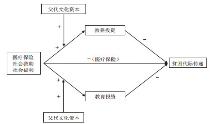
图 2:
社会保障政策对下岗家庭贫困代际传递的减贫机制"
|
埃尔德, 格伦. 2002. 大萧条的孩子们[M]. 田禾、马春华, 译. 南京: 译林出版社.
|
|
|
白重恩、 李宏彬、 吴斌珍 . 2012. 医疗保险与消费: 来自新型农村合作医疗的证据[J]. 经济研究 (2): 41- 53.
|
|
|
鲍震宇、 赵元凤 . 2018. 农村居民医疗保险的反贫困效果研究——基于PSM的实证分析[J]. 江西财经大学学报 (1): 90- 105.
|
|
|
邓锁 . 2018. 资产建设与跨代干预: 以"儿童发展账户"项目为例[J]. 社会建设 (6): 24- 35.
|
|
|
都阳、 AlbertPark . 2007. 中国的城市贫困: 社会救助及其效应[J]. 经济研究 (12): 24- 33.
|
|
|
甘犁、 刘国恩、 马双 . 2010. 基本医疗保险对促进家庭消费的影响[J]. 经济研究 (S1): 30- 38.
|
|
|
关信平 . 2019. 当前我国城市贫困的新特点及社会救助改革的新方向[J]. 社会科学辑刊 (4): 81- 89.
|
|
|
郭于华、 常爱书 . 2005. 生命周期与社会保障——一项对下岗失业工人生命历程的社会学探索[J]. 中国社会科学 (5): 93- 107.
|
|
|
国家统计局(编). 2005. 中国统计摘要(2005)[M]. 北京: 中国统计出版社.
|
|
|
韩华为、 高琴 . 2020. 中国农村低保政策效果评估——研究述评与展望[J]. 劳动经济研究 (1): 111- 135.
|
|
|
贺雪峰 . 2018. 中国农村反贫困战略中的扶贫政策与社会保障政策[J]. 武汉大学学报(哲学社会科学版) (3): 147- 153.
|
|
|
洪大用、 刘仲翔 . 2002. 我国城市居民最低生活保障制度的实践与反思[J]. 社会科学研究 (2): 103- 107.
|
|
|
洪大用 . 2005. 试论中国城市低保制度实践的延伸效果及其演进方向[J]. 社会 (3): 50- 69.
|
|
|
侯景怡、 张建平、 葛扬、 朱岚田 . 2023. 家庭资本与教育投入对子代教育获得的影响研究[J]. 高校教育管理 (5): 110- 124.
|
|
|
华尔德, 安德鲁. 1996. 共产党社会的新传统主义: 中国工业中的工作环境和权力结构[M]. 龚小夏, 译. 香港: 牛津大学出版社.
|
|
|
黄薇 . 2019. 保险政策与中国式减贫: 经验、困局与路径优化[J]. 管理世界 (1): 135- 150.
|
|
|
霍萱、 高琴、 杨穗 . 2019. 从经济政策范式到社会政策范式: 中国农村反贫困历程变迁与动力[J]. 中国农业大学学报(社会科学版) (6): 116- 127.
|
|
|
蒋德理 . 2004. 4050一杠划出喜和忧[J]. 中国社会保障 (3): 32- 33.
|
|
|
李棉管 . 2017. 技术难题、政治过程与文化结果——"瞄准偏差"的三种研究视角及其对中国"精准扶贫"的启示[J]. 社会学研究 (1): 217- 241.
|
|
|
林闽钢 . 2024. 低收入人口常态化帮扶的整体性治理——基于"两项政策"衔接并轨突破口选取的考察[J]. 行政论坛 (4): 155- 162.
|
|
|
刘爱玉 . 2003. 国有企业制度变革过程中工人的行动选择——一项关于无集体行动的经验研究[J]. 社会学研究 (6): 1- 12.
|
|
|
刘精明 . 2006. 劳动力市场结构变迁与人力资本收益[J]. 社会学研究 (6): 89- 119.
|
|
|
卢洪友、 杜亦譞 . 2019. 中国财政再分配与减贫效应的数量测度[J]. 经济研究 (2): 4- 20.
|
|
|
鲁全 . 2022. 新中国成立以来中国共产党的社会保障理念发展与制度实践[J]. 社会保障评论 (6): 40- 58.
|
|
|
齐良书 . 2011. 新型农村合作医疗的减贫、增收和再分配效果研究[J]. 数量经济技术经济研究 (8): 35- 52.
|
|
|
汝信、陆学艺、李培林(主编). 2004.2004年: 中国社会形势分析与预测[M]. 北京: 社会科学文献出版社.
|
|
|
石蓉、 史耀疆、 BillBikales、 RicardoMorel . 2020. 随机干预实验在全球推动扶贫政策改善的经验[J]. 华东师范大学学报(教育科学版) (8): 110- 125.
|
|
|
石智雷、 杨云彦 . 2012. 家庭禀赋、家庭决策与农村迁移劳动力回流[J]. 社会学研究 (3): 157- 181.
|
|
|
宋晓梧 . 2017. 企业社会保险缴费成本与政策调整取向[J]. 社会保障评论 (1): 63- 82.
|
|
|
孙远太 . 2017. 基于阻断贫困代际传递的社会救助政策改革[J]. 理论月刊 (1): 141- 146.
|
|
|
杨方方 . 2023. 社会保障的力量传导与质量提升——兼评"福利病"论调[J]. 社会科学 (2): 154- 167.
|
|
|
杨穗、 高琴 . 2019. 最低生活保障对收入贫困和消费支出的影响[J]. 社会保障研究 (5): 63- 78.
|
|
|
岳经纶 . 2024. 建设"社会湾区": 粤港澳大湾区社会政策协同的目标与路径[J]. 公共治理研究 (4): 18- 34.
|
|
|
张川川、 JohnGiles、 赵耀辉 . 2015. 新型农村社会养老保险政策效果评估——收入、贫困、消费、主观福利和劳动供给[J]. 经济学(季刊) (1): 203- 230.
|
|
|
张晔、 程令国、 刘志彪 . 2016. "新农保"对农村居民养老质量的影响研究[J]. 经济学(季刊) (2): 817- 844.
|
|
|
张子豪、 谭燕芝 . 2018. 社会保险与收入流动性[J]. 经济与管理研究 (8): 27- 41.
|
|
|
赵颖 . 2016. 员工下岗、家庭资源与子女教育[J]. 经济研究 (5): 101- 115.
|
|
|
郑功成 . 2017. 全面理解党的十九大报告与中国特色社会保障体系建设[J]. 国家行政学院学报 (6): 8- 17.
|
|
|
朱火云 . 2017. 城乡居民养老保险减贫效应评估——基于多维贫困的视角[J]. 北京社会科学 (9): 112- 119.
|
|
|
邹薇、 郑浩 . 2014. 贫困家庭的孩子为什么不读书: 风险、人力资本代际传递和贫困陷阱[J]. 经济学动态 (6): 16- 31.
|
|
|
左停 . 2016. 反贫困的政策重点与发展型社会救助[J]. 改革 (8): 80- 83.
|
|
|
|
|
|
|
|
|
Bird, Kate and Kate Higgins. 2011. "Stopping the Intergenerational Transmission of Poverty: Research Highlights and Policy Recommendations." Chronic Poverty Research Centre Working Paper 214. https://assets.publishing.service.gov.uk/media/57a08ae6e5274a27b2000827/WP214.pdf.
|
|
|
|
|
|
|
|
|
|
|
|
Cunha, Flavio, James Heckman, Lance Lochner, and Dimitriy Masterov. 2006. "Interpreting the Evidence on Life Cycle Skill Formation." In Handbook of the Economics of Education, Vol. 1, edited by Eric Hanushek and Finis Welch. Amsterdam: North Holland: 697-812.
|
|
|
|
|
|
|
|
|
|
|
|
|
|
|
|
|
|
|
|
|
Maccoby, Eleanor and John Martin. 1983. "Socialization in the Context of the Family: Parent-Child Interaction." In Handbook of Child Psychology: Vol. 4. Socialization, Personality, and Social Development, edited by Paul Mussen and Mavis Hetherington. New York: Wiley: 1-101.
|
|
|
|
|
|
|
| [1] | 王一. 风险与预期:社会保障对中国居民消费与储蓄行为的影响[J]. 社会杂志, 2009, 29(5): 132-148. |
| [2] | 李迎生. 中国社会保障制度改革的目标定位新探[J]. 社会杂志, 2006, 26(2): 175-188. |
| 阅读次数 | ||||||
|
全文 |
|
|||||
|
摘要 |
|
|||||
